|
 |
|
|
| Missing In Action (MIA) | Prisoners Of War (POW) | Unexploded Ordnance (UXO) |
| Chronology | Locations | Aircraft | Ships | Submit Info | How You Can Help | Donate |
|
| USAAF 5th AF 90th BG 400th BS  C Silber, Jr. 1999 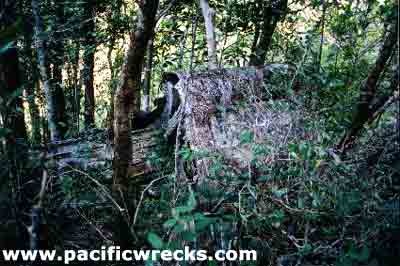  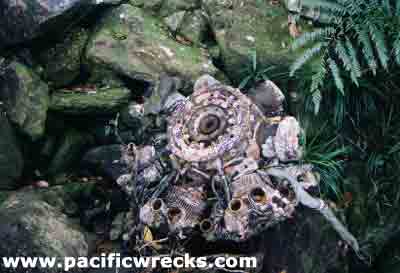 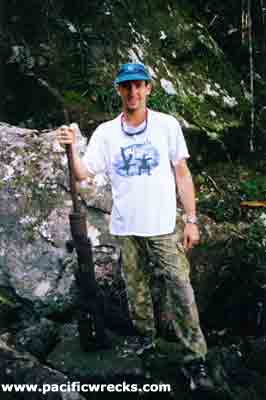 M Hughes 2001 |
Pilot Captain James E. Gumaer, Jr. (MIA / KIA, BR) Co-Pilot 2nd Lt Dewey G. Hooper (MIA / KIA, BR) Almanc County, NC Navigator 2nd Lt David B. Lowe (MIA / KIA, BR) Essex County, MA Engineer T/Sgt Waldo W. Kellner (MIA / KIA, BR) Dade County, FL Radio S/Sgt Walter E. Haydt (MIA / KIA, BR) Carbon County, PA Passenger Col Carroll G. Riggs, US Army 197th Coastal Artillery (MIA / KIA, BR) Bucoda, WA Passenger Lt Raymond F. Dakin, US Army 197th Coastal Artillery (MIA / KIA, BR) Passenger Captain Carl H. Silber, 8th Fighter Group (MIA / KIA, BR) Passenger Capt Peter E. Kiple, 8th Fighter Group (MIA / KIA, BR) Passenger Lt John E. Cooper, Jr., 22nd BG, 19th BS (MIA / KIA, BR) Passenger Robert C. Trevithick, civilian Pratt & Whitney representative (MIA / KIA, BR) Passenger Tec4 Michael M. Goldstop, US Army 1156th Quartermaster Company (MIA / KIA, BR) Crashed December 18, 1942 MACR none Aircraft History Built by Consolidated in San Diego as one of twenty-five model B-24D-7-CO built. Delivered to the U.S. Army Air Force (USAAF) as B-24D-7-CO Liberator serial number 41-23825. Ferried overseas via Hickam Field then across the Pacific to Australia. Wartime History Assigned to the 5th Air Force (5th AF), 90th Bombardment Group (90th BG), 400th Bombardment Squadron (400th BS). Nicknamed "Texas Terror". Mission History On December 18, 1942 at 8:15am took off from Garbutt Field at Townsville piloted by Captain James E. Gumaer, Jr. as one of six B-24s on a flight bound for Port Moresby. Passing Cairns, the formation ran into bad weather and this B-24 was last seen heading out to sea apparently with some kind of mechanical problem. When this B-24 failed to return it was officially listed as Missing In Action (MIA). In fact, this bomber crashed onto Mount Straloch (Mt. Straloch) at an elevation of 3,000' on Hinchinbrook Island, killing everyone aboard. Search Afterwards, searches found no trace of the bomber or the crew. Wreckage During 1943, two Aboriginals prospecting for tin in the upper gullies of Mt. Stralock discovered the wreckage of the B-24 and reported it to the local authorities. According to official records, a navigational error was listed as the cause of the crash. Recovery of Remains After the discovery of the crash site in 1943, remains of the crew were recovered. During 1959, climbers discovered more remains at the crash site. Later, a team from U.S. Army CILHI recovered these remains. Michael Hughes visited the crash site during July 2001: "The wreck is spread over a large area. The impact site is about 10m up the cliff face & the wreckage has fallen down from there. The easily recognizable parts are the wing sections, the engines & props, the undercharge part & some larger sections or the tail & fuselage. There are a couple of .50 guns laying around. There is a lot of wreckage that is just twisted metal & some that has been burned in the fire but if you look hard there are a few remnants of the cockpit & radio station laying about. The aeroplane was brand new at the time of the crash & the manufacture date stamped on one of the props is still mostly legible& reads 10-10-42." Justin Taylan adds: "For unknown reasons, the dog tag of Waldo Kellener ended up at 17-Mile Drome (Durand) near Port Moresby and the dog tag was found by Henry Mayer in 1995. It is unknown how his tag got there, was he station there before the crash? Did a friend have his tag and subsequently loose it there? If anyone has any details or is a relative of this crew member, contact us to have the tag returned." Memorials The entire crew was officially declared dead the day of the mission. After the 1943 recovery of remains, the crew was initially buried Ipswich Cemetery (USAF Cemetery Brisbane). Postwar, their remains were exhumed and transported to the United States for permanent burial. On January 7, 1949 buried at Fort McPherson National Cemetery at section F, site 1117 in a group burial including Hooper, Haydt, Riggs, Dakin, Silber, Kiple, Trevithick and Goldstop. Dakin also has a memorial marker at Maple Grove Cemetery in Munising, MI. A six-foot aluminum cross was made by Royal Australian Air Force (RAAF) cadets at Garbutt Field and was erected at the crash site. The cross bears the names of those who died in the crash. During 1999, a stone memorial with a propeller blade recovered from the crash site was erected at Ingham, a more accessible location than the crash site. The bronze plaque lists the names of each member of the crew. Relatives Carl H. Silber, Jr. (son of Carl H. Silber) C. W. Hooper (brother of Dewey G. Hooper) Carl Wall (nephew of Dewey G. Hooper) References NARA World War II Army Enlistment Records - Dewey G. Hooper NARA World War II Army Enlistment Records - David B. Lowe NARA World War II Army Enlistment Records - Waldo W. Kellner USAF Serial Number Search Results - B-24D-7-CO Liberator 41-23825 FindAGrave - Capt James Edward "Eddie" Gumaer (memorial photos, group burial photo) FindAGrave - 2LT Dewey G Hooper (memorial photos, group burial photo) FindAGrave - 2LT David Lowe (memorial photos, group burial photo) FindAGrave - TSGT Waldo Willard Kellner (memorial photos, group burial photo) FindAGrave - SSGT Walter E Haydt (memorial photos, group burial photo) FindAGrave - Col Carroll Gowen Riggs (photo, group burial photo) FindAGrave - 1LT Raymond F Dakin (memorial photos, group burial photo) FindAGrave - Raymond F. Dakin (memorial marker photo) FindAGrave - Carl H Silber (memorial photos, group burial photo) FindAGrave - Peter E Kiple (memorial photos, group burial photo) FindAGrave - 1LT John E. Cooper, Jr (memorial photos, group burial photo) FindAGrave - Robert C Trevithick (memorial photos, group burial photo) FindAGrave - Michael M Goldstop (dog tag photo, memorial photos, group burial photo) Legacy of the 90th Bombardment Group page 32 Oz @ War - 18 December 1942 crash of a B-24 Liberator on Mt. Straloch on Hnchinbrook Is Contribute Information Are you a relative or associated with any person mentioned? Do you have photos or additional information to add? Last Updated
|
 B-24  MIA 12 Missing Resolved |
| Discussion Forum | Daily Updates | Reviews | Museums | Interviews & Oral Histories |
|