Bataan Death March
The
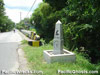
final mileage markers of Bataan Death March Markers is located outside
Camp O'Donnell, 111km, 100km and 109km. Each marker
was donated by a private individual or organization
and is listed on the rear of the marker. The front
indicates the mileage of the death march, with 0km
being the start at Bataan.
Camp
O'Donnell (Capas
POW Camp, Capas National Shrine)
O"Donnell Highway and
terminus of Capas Bataan Heroes Road Barangay Aranguren Capa
Open daily, 8am - 5 pm
Pre-War History
Established
in 1940 as a cantonment center for military training
of Filipino youth. Became a cantonment and
mobilization center for the 71st Division, Philippine Army,
USAFFE on July 15, 1941 on orders from US President
Roosevelt.
Wartime History
After the fall of Bataan, the camp
was transformed into a POW Camp in mid-April 1942 as
the terminus of the 100+ km Bataan Death
March for Filipino and Americans that surrendered
and were forced to walk to San Fernando and then aboard crowded rail road cars to the camp. Renamed
Capas POW Camp, an estimated 60,500 Filipino and American
POWs were marched here, sick and dying from
untreated wounds and brutality by the Japanese.
The Filipino POWs from the Bataan Death March were released from Camp O'Donnell on June 6, 1942 and told
to return to their villages. By
July 25, 1942 an estimated 30,000 had died
here. Remained POWs were sent to other camps including Cabanatuan
POW Camp.
Jessica Sison adds:
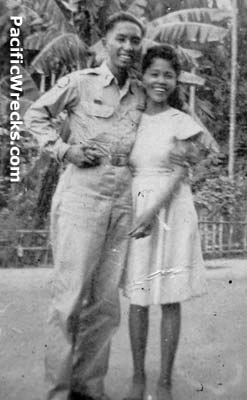
"My great uncle Pacifico Santo Domingo was part of the Death March. When he was going to be released from O'Donnell, my great aunt Isabel was told to show up at the camp wearing "makeup and a pretty dress." She was not told why. About a month later, her friends came back from Manila and said they saw her and her husband in a Japanese propaganda film. My great uncle was emaciated and suffering from malaria and dysentery. My great aunt said he was wearing shorts and his legs were so thin that his knees were bulging. If anyone knows this film, it would make a 91 year old woman very happy. Pacifico has already passed away."
Today
The camp became part of the Clark
Air Base Military Reservation, and then was turned over
to the Philippine Government on April 9, 1982. Later Philippines President
Corazon Aquino proclaimed it to become Capas National Shrine
on December 7, 1991. The shrine encompasses 54 hectares of
parkland where the Bataan Death March ended. 35 hectares of land
have been planted with rows of trees to represent each of the deceased
at the camp, and to promote environmental consciousness. A few kilometers
from the shrine is the new Camp O'Donnell that is a headquarters for
the modern day Philippines army.
Esplanade
A wide mall from
the main gate, flag pole stretches to the central Obelisk area. To
the east side is the replica POW Camp constructed for the 2003 dedication. To
the west side is the nature park with rows of planted trees.
Obelisk & Memorial Plaza
Center
point of the shrine that represents peace, each of the three segments
of the tower represents Filipino, American and Japanese people, and
massive height the desire of all those groups for world peace. It
is visible from the entire Capas area.
Wall of Heroes
On April 9, 2003, a new memorial wall and obelisk was unveiled. A
black wall surrounds the obelisk, each wall is engraved with
the names of the Filipinos and Americans known to have died at this
location. It includes statistics about the total numbers of prisoners,
deaths and poems for peace on the three large wall segments that nearly
encircle the obelisk.
Replica POW Camp
Constructed
for the rededication in 2003, this replica camp area includes two
guard towers and a prisoner's quarters building in a field to the
east of the Esplanade.