|
Ship History
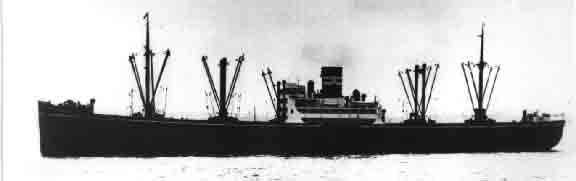
Owned by Osaka Shosen Company and placed into service in August 1930. Used as a modern fast luxury freighter traveling from Tokyo to
New York.
Wartime History
Re-commissioned as a freighter under contract to the Japanese Imperial Navy
in October, 1941, and was used to transport war materials and personnel
throughout the Pacific.
On January 24, 1943 the Tokai Maru was observed anchored
in Apra Harbor off Guam. Spotted by USS Flying Fish SS-229, the submarine waited for the ship to leave harbor and waited outside the harbor entrance
for three days. When Tokai Maru failed to move, they fired two torpedoes set to run at 1' depth. One of the torpedoes ran
aground on the reef, but the other struck Tokai Maru causing considerable
damage, but did not sinking her.
Sinking History
Seven months later, USS Snapper (SS-185) was patrolling
west of Guam and spotted two ships in Apra Harbor Unaware at the time
that these were the damaged vessals Tokai Maru and Nichiyo Maru,
the submarine patiently waited for one week, and then made a submerged
attack under with enemy patrol vessels less than two miles
away.
On August 27, 1943 at 3:23pm USS Snapper (SS-185)
fired a spread of four torpedoes, three at the nearest ship, Tokai Maru and fourth at Nichiyo Maru. Afterwards, the submarine immediately headed westward into safer waters. Over the next few hours numerous explosions were heard,
and the Tokai was observed with the bow at an extreme "up angle",
indicating that the stern was on the bottom. A few minutes later the
Tokai slipped beneath the surface, sinking into Apra Harbor. She was sunk only six feet
away from the wreck of the SMS Cormoran.
Commander M.K. Clementson recalls:
"For
the next 10-15 minutes heard some very faint distant explosions undoubtedly
inside the harbor and one explosion about 100 yards away (from the
submarine), probably from the patrol vessel. His screws were not
heard after this so it is believed possible that this nicely inefficient
gent probably decommissioned himself. Departed from the area at good
speed, and depth, however."
Leon Theriault adds:
“While station in Guam in 1959 with MCB5 ‘Seabees’ made a dive to the Tokai Maru, at that time there was a lot of china plates scattered along the bottom next to the wreck site, one of the other items that was salvaged%2C was a very nice looking purple marble washbasin, i still have the picture of that. at that time their didn't seem to be to much of and interest in wreck diving. I did make more dives to that wreck.”
Shipwreck
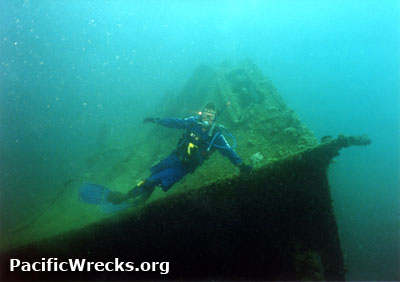
She rests in 120 feet with an 85 degree list to port (left). The shallowest
part of the ship is the upper forward bridge area at a depth of 40 feet.
There is damage on the starboard bow, but this is believed to have been
inflicted on the first attack in January, 1943. Visibility averages 35-40',
but can vary due to the tide and large ship traffic in the harbor.
Dan Lantzy adds:
"The other photo is a bow shot of the Toki Maru. It rests in about 130 feet of water resting on it's port side. If you look close at the photo, you can see some of the damage aft of her bow on the starboard side. it was initially struck with artillery shells from a surface warship. That damage put her back in port. Later, she was struck by a torpedo via a U.S. sub. The most interesting thing about this wreck is she's actually touching SMS Cormoran."
Cargo Holds
A torpedo has blown a hole in the port #3 cargo hold, and this is undoubtedly
the torpedo that sunk her. Contains remains of truck frames, beds, scrap
steel, and miscellaneous objects. The engine room is huge, and both of her engines,
catwalks, and panels are intact. The after deck house in the stern of the
vessel contains at least 4 depth charges, which are plainly visible from
the top of the structure.
Contribute
Information
Are you a relative or associated with any person mentioned?
Do you have photos or additional information to add?
Last Updated
August 26, 2022
|