|
 |
|
|
| Missing In Action (MIA) | Prisoners Of War (POW) | Unexploded Ordnance (UXO) |
| Chronology | Locations | Aircraft | Ships | Submit Info | How You Can Help | Donate |
|
| IJN Navy Auxiliary Repair Ship 5,110 Tons 422' length 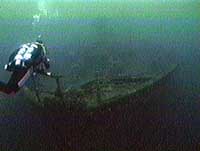 Andrew Wright 1994 |
Sinking History The cargo holds are full of machinery. drills, lathes, presses, welders, and every imaginable type of metal working machines lined the decks with everything from hull plates to torpedoes. During the 1960–1970s, a number of relics collected by divers from the wreck are displayed at the Kokopo War Museum, including the ship's clock, stopped at 5:40pm, the moment the ship sank. A diver decompression chamber was bolted to the fore deck measuring 5' long and 10' wide, including nickel etched dive tables bolted inside. In 1971, an unsuccessful salvage attempt was made to recover the chamber, documented by a Japanese film crew. Later, salvaged by diver Jim Forrest and abandoned at Pat Robert yard along Blanch Bay where it remained until the 1980s. Ultimate fate unknown, likely scrapped or otherwise disappeared. During the 1994 volcanic eruptions at Rabaul, the shipwreck was covered in ash, and is no longer able to be dived. References Contribute
Information Last Updated
|
 80 - 170' |
| Discussion Forum | Daily Updates | Reviews | Museums | Interviews & Oral Histories |
|