|  |
|
| |
|
| Missing In Action (MIA) | Prisoners Of War (POW) | Unexploded Ordnance (UXO) |
| Chronology | Locations | Aircraft | Ships | Submit Info | How You Can Help | Donate |
|
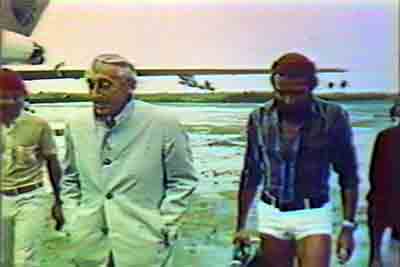 Produced & Written by Kenneth M. Rosen Associate producer Director of Photography Underwater Cameraman Philippe Cousteau Chief Divers Christian Bonici 1969 Language: English
Return to |
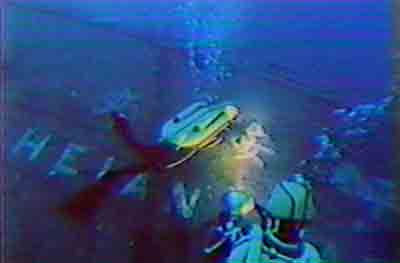
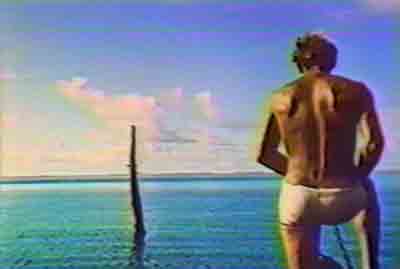
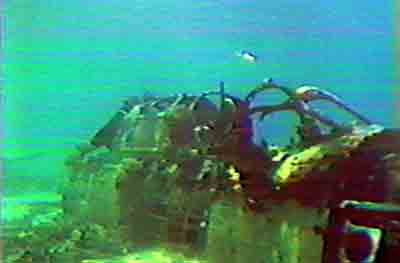
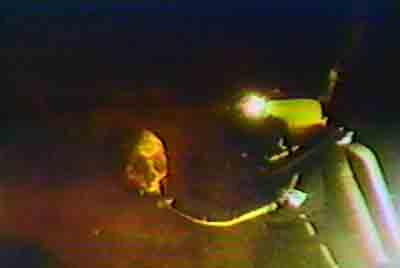
The Undersea World of Jacques Cousteau Lagoon of Lost Ships Jacques Cousteau's 1969 documentary "Lagoon of Lost Ships" about the shipwrecks of Truk Lagoon. When it was first released, this documentary reveled new discoveries and to this day still inspires awe. Many contemporary divers cite this film as one of the reasons they became interested in wreck diving. Unique in so many ways, this film has a quality lost today and impossible to replicate today. First, the entire expedition was filmed, not captured on video. This fact gives the footage a unique quality missing from the multitude of historical documentaries one absorbs daily on cable television. The other component is the intangible formula of a Cousteau production - diving, natural history, exploration and historian. Or maybe it is his trademark red hat, and French accent? Others have since duplicated this formula, but never surpassed the master. A number of factors made this documentary so successful. Only twenty five years had past since Operation Hailstone, when the ships of Truk were sunk. Breathtakingly preserved and untouched by divers and souvenir hunters. Second was the technology employed, a scanning radar device with a chart recorder, and maps from the USS Tanner hydrographic survey during 1968–1969. The documentary follows the two month expedition of members of the Cousteau team, headed by his son Philippe to Truk Lagoon in 1969. The group did not travel on their famed Callipso, instead opting to work with Trukesse dive operator Captain Sequo off his vessel Hopeful who was intimately familiar with the area. Later, they were joined by Jacques Cousteau who arrived by plane. The film begins with World War II footage of the Japanese on Truk: building defenses, unloading ships and USN color footage, including some from Hailstone that resulted in dozens of ships sunk and the airfields and surrounding islands smoldering. The film begins on Dublon Island with Uman Island in the distance, with the team exploring the rusting relics of the Japanese occupation, including a Japanese 127mm Anti-Aircraft gun and bomb craters that have since become breeding pools for mud skippers. One of the observations Cousteau makes is how the Lagoon is devoid of large fish and sea life that usually dwell in shipwrecks. The scars of war as still fresh, and even in the late 1960's large fish had been driven away by use of wartime explosives for fishing. As Cousteau says "For generations to come, the living to carry the burden." The team then proceeds to dive and document a number of the most famous shipwrecks in Truk Lagoon plus a D4Y1 Judy aircraft that ditched. At the time the film was made, most of the identities of the wrecks the team dove were unknown or unconfirmed. Since then, authors like Dan Bailey and his book WWII Wrecks of the Truk Lagoon have revealed precisely which ships Cousteau discovered or visited. A full account of this, and the issues surrounding the filming are addressed in his comprehensive book. Although the footage from several wrecks is edited together, the depths of wrecks are exaggerated, this work still holds up today as an amazing work of underwater photography and documentary film making. The footage that recorded is breath taking and mesmerizing. Their preservation is remarkable and the team discovers sea life and many haunting reminders of the men who perished on these wrecks - including fabric items like a sailors hat, shoe, folded blankets and skeletal remains. As Cousteau explains, shipwreck are mysteries to us, we seek the story behind them. The Cousteau team's efforts culminate with an sonar search in the Eten Anchorage, and an eerie dive on the Aikoku Maru, where they record spectacular footage of the remains of hundreds of soldiers who perished in the special living quarters built around the third hold. The film summaries Truk best with its closing statement: "Truk Lagoon presents a mysterious planet of life and death. On the one hand, nature absorbs the artifacts of war. And on the other, she has preserved them. Only centuries from now, will every trace of man's follies vanish from the bottom of Truk Lagoon." Difficult to obtain, I have been unable to find it for sale anywhere online, or even in the collection of my public library. Aside from those who caught it on television when it aired in the United States on May 14, 1971 or are lucky enough to come across a copy, this great documentary is like a undiscovered relic itself for those lucky enough to view it. The documentary is viewable at Daily Motion "The Undersea World of Jacques Cousteau - Collection 1 Lagoon of Lost Ships. Shipwrecks discovered and documented Aikoku, Amagisan, Fujisan, Hoki, Hokuyo, I-169, Kensho, Kikukawa, Momokawa, Nagano, Nippo, Reiyo, San Francisco, Seiko, Shotan, Taiho, Unkai No. 6 , Yubae Aircraft and shipwrecks dived and documented D4Y1 Judy, Fujikawa, Gosei, Hino No. 2, Hoyo, Rio De Janiro, Sankisan, Shinkoku, Yamagiri, Kiyosumi, PB No. 34 Review by Justin Taylan Return to Book Reviews | Add a review or submit for review |
| Discussion Forum | Daily Updates | Reviews | Museums | Interviews & Oral Histories |
|