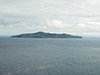
Watom Island

Lat 4° 7' 0S Long 152° 4' 0E  Island to the west of Rabaul. A contingent of British soldiers were interned at Watom Island after their capture in Singapore. Only 17 survived the war out of the original contingent of 300 people. There were no senior officers or NCOs who survived the experience. At the time of their liberation on September 7, 1945 was believed to be Sgt. Blythe. 17 Watom POW survivors were:

Map
Collin Docketty's Trip to Watom


British POWs of Watom Island
Number
Rank
Name (nickname)
Company
Hometown
851969
L/bdr
Ahern
7th C
Flrmoy, Ireland
1799596
Gnr
Alf Baker
3rd AA
Plymouth, Devonshire
1700369
Sgt
Joe Blythe
35th LAA
Nottinghamshire
843976
Bdr
Burglass
20th HKS
Yorkshire
2048251
L/Bdr
5th SL Surrey
London, England
3850959
Bdr
W Dunne
9th C
Lancashire
850014
Gnr
Fowler (Nobby)
7th C
Derbyshire
1635296
Gnr
Gabbert
6th AA
Lancashire
1604796
Gnr
Jones
3rd AA
Shropshire
1063742
L/Sgt
Matts
7th C
Portsmouth
1492839
Gnr
Moore
7th C
South Wales
857219
L/Bdr
Murphy (Spud)
3rd AA
Scotland
1058699
L/Bdr
Newall
7th C
London
845353
L/Sgt
Nolan (Patrick)
9th C
Northern Ireland
1686309
Gnr
Slater
5th SL
Nottingham
???????
Gnr
Smelt (Len)
3rd AA
Nottingham
???????
Gnr
Walker (Ken)
7th C
North Wales
868015
Gnr
White
3rd AA
Scotland

Today
The island has no electricity and gets only a handful of visitors. Thanks to Samuel Niba Billy, Peter Leggett, Steve Saunders and Collin Docketty for information and photographs.

POW Tunnel & Naval Guns
Peter Leggett reports: "The large tunnel the POWs' dug, is still there, housing a large naval type gun on high ground at the north of the island. There are other small tunnels cut into rock on the island. Watom itself is volcanic and was formed before the Gazelle Peninsula. Nothing much else on the island, I've walked over it many times. At present time there is a ban on scuba diving and people visiting the island from a problem caused with Star Dancer over a year ago. I have been talking with a number of the people who have asked us to go back there once things are sorted out with their community leader."

Japanese Tunnels
The island is volcanic and formed before the Gazelle Peninsular, so work labor done by POWs was very hard. Some tunnels can be seen from the sea, cut in the cliff face above the high tide mark. These tunnels do not go in far and would have been used more as a pill box for Japanese soldiers defending shore approaches.

Investigation and confirmation of POW sites
Report by Watom resident, Samuel Niba Billy & recollections of locals

I have confirmed seven POW sites with varied people who were young people at the time in 1942-1945. Preparation for clearing is underway. Any tourism visit to would also be a one day tours. I am planing the route for a day tour, it may take only 3-4 hours back and forth. Reports of POWs stationed in various parts of the Island was confirmed on my recent fact finding trip on the Island (April 2002). The Investigation took two days around and inland of our Island. I took great care and selected my candidates, old people that were young people during the war. Investigation revealed seven POW camp sites on the Island. It is, however, likely that there were more than this number.

Prisoners and Duties
The Prisoners were allotted in threes per campsite. It is believed from this sum that a total of twenty-one prisoners were on the Island. Careful questioning could not confirm the exact numbers. The prisoners were strictly guarded, the locals were not allowed to talk to, contact them, or even come in close proximity to the POW sites.

People interviewed relate that the prisoner's condition deteriorated everyday, they were ill-treated with little to eat. They lived in a very poor environment with little clothing and poor shelter. The locals were concerned by their condition and at every opportunity available assisted them. Locals and the prisoners established signs and other methods available to them for contact. Signs such as singing, whistling and many other traditional signs known to the locals.

Investigation reveals that the prisoners were given all sorts of food from ripe banana, pawpaws to cooked local food, which the prisoners were not accustomed to. The locals tried very hard to assist them, risking their lives at all times, often coming near to being caught.

Found here is also a story of two young Watom Islanders killed at a young age at Ramata, known as Tunnel Hill, Balanataum LLG at the fringe of Rabaul Town, for allegedly assisting the prisoners. They were buried at Vunatauntabun(?), Vunadavai, Livun LLG, North Coast Road. Their memorial still stands to this day at that place.

Also I recall a story told by my Mother - My Father and others were punished severely for allegedly helping the prisoners and stealing from the Japanese supply depot, it may have been for stealing. Even so, at Ratagitagi, Vunaidara, Rau Ward, my father and his relatives were helping the prisoners. A very disturbing finding - I found it hard to establish any names of the prisoners. All prisoners' names were not known to the locals at that time. I only extracted one well-known prisoner by the name of Mr. Holland.

This particular prisoner may have been well known to the locals due to his manner and out standing character, very aggressive, indifferent to the treatment and to the Japanese, combined with his physical status. He was a very strong and well-built person and very aggressive in his manner. No other prisoner names were known to the people I interviewed.

Duties and Work Designated
A word well known to the people or locals is "Kakakai na Iasi". This combination of Kuanua (Tolai Dialect) and Japanese refers to the type of work and duties performed daily by the prisoners. The main work or duties performed daily, the interviews revealed, was the collecting and scrapping of coconuts. There was a huge heap of coconuts after a day or three of collecting, then a day of husking followed by a day each scrapping and squeezing. The work is believed to have been a weekly routine or a daily routine, week after week.

The oil refined from the coconut milk is believed to commonly have been used for cooking food. When further questioned the old people such as ToBukal and ToPatol of Rakival, could not mention any other use, apart from food oil preparation.

Apart from Kakakai na Iasi the locals could not confirm firmly any other work duties. When questioned on cave digging and trench work they suggested that the prisoners may also have been involved in this work. The reason they do not know may be due to the fact that the cave and trench digging were done in isolated places where people were not allowed to roam.

Caves were dug in places hidden from public eyes and kept secret, this may have been due to Japanese Military Planning strategy of importance. Only at one campsite (POW) at Ratavul the prisoners were seen at times digging a water hole at Takavavar, story related by Nasren ToMuria told him by his late Mother Vilimaina IaKivung.

Here is a brief story of what happened to the POW station at Watom Island. - The POW prisoners number may have been more than the number in this report. Unknown to the locals at that time, there could have been more than twenty-one English Prisoners stationed on the Island. Many may have been assigned to cave and trench digging with out people knowing. As well as the long and short trenches along and across the whole Island.

Conclusively attached are the various POW sites and names of deceased people involved and a couple of oldies who were young people during the War 1942-1945.

Here are some of the Japanese Army Captains; the locals refer to as Boss and their Military Sectional Commander OGATA and SIGIMATU. One of these two Commanders was stationed at Palakeu - Rau Ward.

Many of the captains were stationed in various places on the Island.

The names and the places of command and protection are noted here.

1. Captain Nakamura - Tokyo - Watom Island. The native or local name for this place is Vunalolo and Ramarovat.

A West New Britain, Andras Pakuk, who was married to a woman by the name of IaPui from the same place befriended Captain Nakamura and collaborated with him to name this place as Tokyo, after the Japanese Capital City. Investigation reveals that no major activity done here.

The place may have been used as a transit and storage/supply depot of Military Equipment and Army supply of all sorts. Local people were not allowed to venture near Tokyo, they were moved inland.

2. Captain (Boss) Tadi - Naman - E. Watom Island. In command of the North Shore of Tokyo.

3. Captain (Boss) Sigaki - Rakamara - Watom Is. In command of POW camp and site a kilometre or two inland of Tokyo - to as far as Rakival (NE point of Island).

4. Captain Pukuda - Naveaua - Rau - Watom Island. In command of large area inland - Rau the caldera part (Center) of the Island.

5. Medical Officer - Captain Marakamia. Attached to the Central Command Post at Palakeu where Ogata was in command.

Campsite (POW sites) - Kakakai na Iasi.

1. Rakamara (Vunatokalapu) (NE of Island)
Number of prisoners - English prisoners (3).

People assisting these prisoners; an old couple (deceased) Martina and ToPaulo, IaVola their daughter and others of Rakival. Magar ToNamau was involved in assisting these three prisoners, with food and smoke - cigarettes or tobacco.

Rakamara is ToBukal's clan land. People interviewed - Patal and IaVola married couple old at time of interview namely 8 April 2002.

ToBukal and IaKavai relate and confirmed ToPotols and IaVolas story. These two old couples also mentioned two other names or couples (deceased) ToKapuraurua and IaMavoko.

2. Taranata (NW of Island, opposite Rakival)
POW site - Ramarovat Kakakai na Iasi - Number of prisoners (3).
IaKavai relates a story of her father ToKatai helping one of these prisoners.
Many of the people (deceased) were also involved. Ramarovat land belongs to ToVarvaka's clan. ToVarvakai's clan members might also have been involved.

3. Ulakaia - Rau Ward (Center of Island)
POW sites. Kakakai na Iasi.
ToLalir relates a story of 20 English Prisoners here. This site is in close proximity to Central Command Post at Palakeu and a Japanese Military Workshop at Vunapaka. The prisoners were on same work duties - Kakakai na Iasi. Scrapping collecting and squeezing coconut for milk to manufacture oil for cooking. Large numbers of prisoners seen here. They may have assigned to cave and trench digging around the clock or on a shift basis. ToLair could not single out any particular person or couples assisting these prisoners, but he generalised the whole people of Rau were collectively involved.

4. Kalirit - Rarede Shores (just SW of Taranata)
Taranata - Watom Island. (Kakakai na Iasi). ToLair also relates to (3) three English prisoners here; work duties as commonly mentioned above.

5. Ratavul (S. Central) - POW sites - " Kakakai na Iasi"
ToMuria relates a story told by her Mother IaKivung of 3 (three) prisoners here. They were generally assisted by the people there especially ToKatai, ToPakur, ToBuruna and IaKivung.
Three others were involved in digging a water hole at Takavavar near Ratavul. The people mentioned above and relatives owned the land at Ratavul.

6. Ratagitagi POW Site - Vunaidara - Watom Island. " Kakakai na Iasi"
Ratagitagi POW site is located on my Fathers clan land. My Father's name is Demas Billy ToNgatigat. My Mother IaBauit relates to 3 prisoners here, scrapping and squeezing coconuts.
She could not recall who were assisting these prisoners, but she suggested her husband and his relatives. Because they were young men and boys at that time. The land where the POW Site was located was their clan land.

7. Vunakarakum - POW sites - Vunaulaiar (Inland SE) - Watom Island.
Here also were 3 English prisoners. Duties as commonly mentioned. Also here a story of a native by the name of ToLeo assisted an Australian spy to snatch one of the prisoners and help him escape.

8. Ramata - POW sites - Balanataman LLG.
ToMuria relates a story of his two relatives as told by his Mother Kivung Viliunaina, Petro Tatam and Michael Tirava. These two young men were killed by the Japanese Army for allegations of them helping the prisoners. Tirava was buried at Vunatamtabun, Vunadavai, Livun LLG, North Coast Road. These two young men are related to Watom Island LaKivung's clan.


© 1997-2008 All rights reserved
Pacific Wreck Database
Pacific Wrecks Incorporated is a non-profit charity 501(c)(3)  Donate Now