|
 |
|
|
| Missing In Action (MIA) | Prisoners Of War (POW) | Unexploded Ordnance (UXO) |
| Chronology | Locations | Aircraft | Ships | Submit Info | How You Can Help | Donate |
|
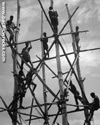 US Army Sept 9, 1943 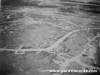 USAAF c1944  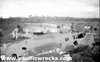 Roberts 1947 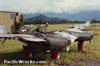 Phil Bradley 1995   Justin Taylan 2004 |
Location Lat 6° 34' 11S Long 146° 43' 34E Nadzab Airfield is located at Nadzab in the Markam Valley of New Guinea. To the southeast is Lae. Also known as Nadzab Drome, Nadzab No. 1, No. 1 Strip or East Base. Prewar and during the Pacific War located in the Morobe District in the Territory of New Guinea. Still in use today as part of "Nadzab Airport" or "Nadzab Lae Airport" in Morobe Province in Papua New Guinea (PNG). Wartime History During early 1942, occupied by the Japanese with only occasional Japanese Army patrols through the area. Some references incorrectly show a Japanese emergency strip at this location. In fact, there was no airfield was built at this location. On September 5, 1943 Allied paratroopers from the U.S. Army 503rd Parachute Infantry Regiment (503rd PIR) and Australian Army 2/4th Field Gun Volunteers landed with short barrel 25 pounders made a successful parachute drop in the area. On the ground, they met met little resistance. This was the only Allied paratrooper assault in New Guinea. Construction During September 1943, built by the U.S. Army as two parallel runways (Nadzab No. 1 Airfield (No. 1 Strip) to the north and Nadzab No. 2 Airfield (No. 2 Strip) to the south nearest to the Markham River. The runways were oriented northwest to southeast surfaced with marston matt / Pierced Steel Planking (PSP) and was rapidly developed into a massive airbase complex. Nadzab based U.S. Army Air Force (USAAF) and Royal Australian Air Force (RAAF) planes and staging base. Designated U.S. Army Post Office 713 / APO 713 (Nadzab). American and Japanese missions against Nadzab March 23, 1943–November 9, 1943 Wartime History Nadzab Airfield became a major airbase for Allied bombers, fighters and transports. U.S. Army Air Force (USAAF) 5th Air Force (5th AF) squadrons began moving from Port Moresby, Dobodura and other locations to Nadzab in October 1943 and remained at this location until moving further north to Gusap Airfield or later the airfields at Hollandia and Biak. American personnel remained at Nadzab area airfields until the end of the Pacific War. American units based at Nadzab Based at Nadzab Airfield No. 1, No. 2, No. 3 and No. 4 Veteran John Farrell recalls: "As a pilot in the 319th Squadron of the 90th Bomb Group I remember well my time at Nadzab. Many early morning take offs were in foggy conditions and on the return trip from a mission we often encountered stormy conditions. It rained every day and was hotter than the hinges of hell. Mountains loomed very close at takeoff and landing. Altogether a scary place." Veteran Jack Heyn recalls: "The one event that sticks very prominently in my mind was not a pleasant one. The 90th Bomb Group was also stationed at Nadzab with their B-24's. There was about a six day stretch when you could almost set your watch at 7:00 A.M. by an explosion. It would be a B-24 fully loaded with bombs and fuel, exploding on take-off. Never did hear what the problem was, but they made a hell of a racket and a hell of a crater in the runway. And that was a hell of a way for those poor guys to go -- but then there ain't no easy way." Joe Potts, 40th Fighter Squadron recalls: "It was at Nadzab that I saw the Ki-61 Tony for the first time, that was a sweet looking plane. They came down and strafed us. We all dived into the nearest trench, all falling on top of each other. We could hear the bullets whistling by as they strafed, they really did whistles, just like in the movies! They were sleek looking planes with that in line engine. They looked like our P-51s! Also at Nadzab, I remember getting a 'speeding ticket' in a jeep, doing 35 mph in a 30 mile an hour zone! The MPs followed me and matched my speed. There was no one else on the whole road! But, you know how cops are!" During late 1944 until the end of the Pacific War, the 21st Air Depot (21st AD) maintained a large boneyard area for planes that were written off and abandoned at Nadzab. During 1944 until June 1945 the Far East Air Force-Combat Replacement Training Center (FEAF-CRTC) operated at Nadzab to provide in-theater training for new pilots and air crews. Missions included combat missions over isolated or bypassed Japanese targets on the north coast of New Guinea and New Britain until June 30, 1945 when the unit relocated to Clark Field. Postwar Most of the wrecks at Nadzab were scraped immediately after the war, permits being awarded to private contractors who were given rights to scrap aircraft, sell aviation fuel and oil. As early as September of 1945, hundreds of wrecks were scrapped by a private Australian smelting company. Two expatriates involved with the scrapping were Eric Snook(s) and Arthur Scott. In the middle 1970s Charles Darby was still able to locate the wreckage of a Stinson L-1 and eleven Hadrian CG-4 gliders. Nadzab No. 1 and Nadzab No. 2 known collectively as "East Base" remained in use since the war. Nearly every road in the area was built by American forces. From the air, even disused taxiways and roads are visible from the air. Today The former 'East Base' or No. 1 & No. 2 runways are still in use today as "Nadzab Airport" or "Nadzab Lae Airport". Used by Air Niugini and other aviation companies. The runway measures 2438m x 30m at an orientation of 09/27 at an elevation of 231'. Airport codes: ICAO: AYNZ and IATA: LAE. References Engineers in Theater Operations [Pacific] "Advance Area Aerodromes 31 January 1944", Map No. 24 NAC - Nadzab Lae Airport (Lae) Contribute
Information Last Updated
|
 Map 1944 Map Fallingrain  Nadzab #1 View on Google Earth  Photo Archive |
| Discussion Forum | Daily Updates | Reviews | Museums | Interviews & Oral Histories |
|