|  |
|
| |
|
| Missing In Action (MIA) | Prisoners Of War (POW) | Unexploded Ordnance (UXO) |
| Chronology | Locations | Aircraft | Ships | Submit Info | How You Can Help | Donate |
|
| USAAF 5th AF Service Squadron Former Assignments 35th FG 39th FS 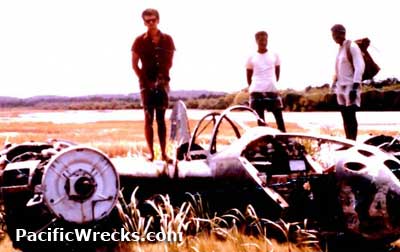 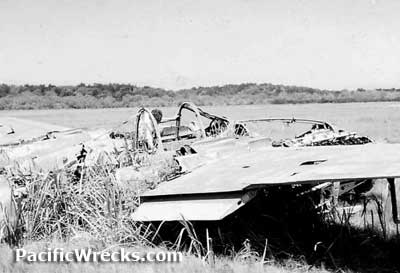 Via PNGBD 1968 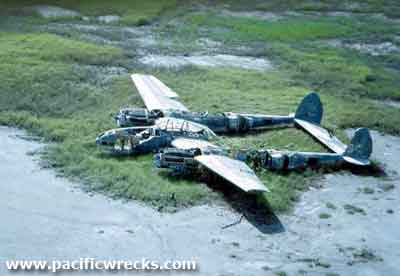 John Loughman 1969 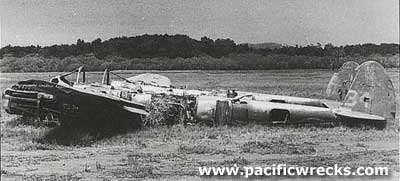 Bruce Hoy 1978 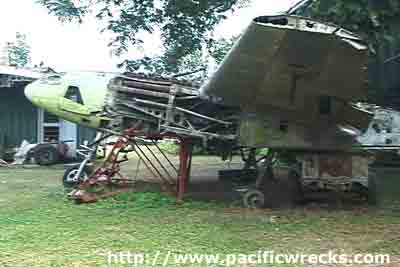 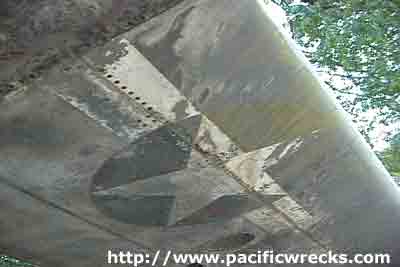 Justin Taylan 2000 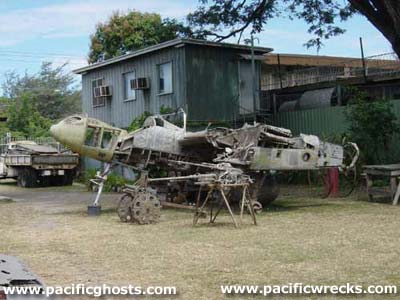 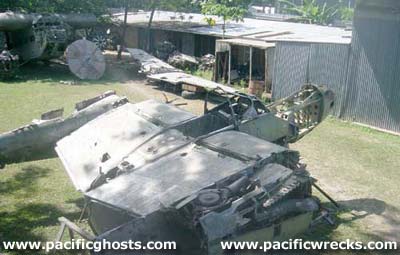 Justin Taylan 2003 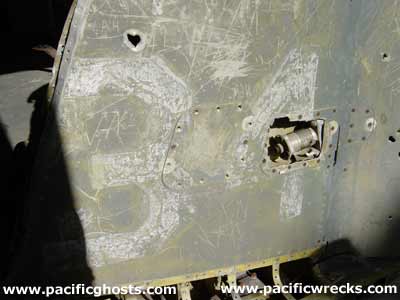 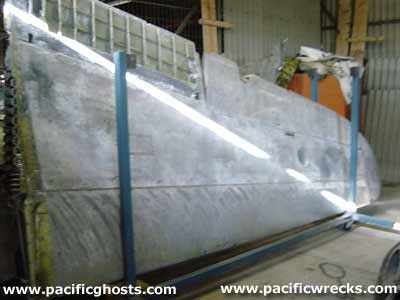  Justin Taylan 2003  Justin Taylan 2023 |
Aircraft History Built by Lockheed Aircraft Corporation (LAC) in Burbank. Constructors Number 222-7081. Delivered to the U.S. Army Air Force (USAAF) as P-38F-5-LO Lightning serial number 42-12647. Disassembled and shipped overseas to Australia and reassembled as one of the first batch of P-38 Lightnings to arrive in Australia. Wartime History Assigned to the 5th Air Force (5th AF), 35th Fighter Group (35th FG), 39th Fighter Squadron (39th FS). No known nickname or nose art. Tail number 34. Assigned to pilot 1st Lt Ralph C. Bills and Lt Wayne Rothgeb. This P-38 was often flown by pilots in the squadron including Lt. Richard E. Smith and Lt. Stanley Andrews. On December 31, 1942 took off piloted by Bills on an escort mission over Lae and claimed his second Zero shot down. On May 14, 1943 took off from Dobodura Airfield piloted by Lt Wayne Rothgeb on an interception mission. During the flight, the right turbocharger exploded an altitude of 27,000' and landed on one engine at 14 Mile Drome (Schwimmer) near Port Moresby. Afterwards, the right engine was repaired. On July 21, 1943 took off piloted by 2nd Lt. Walter C. Baker on a mission 18-2 over Lae and Salamaua. Baker claimed a fighter as a probable. Afterwards, this P-38 was transfered to a service squadron at Port Moresby. Mission History During January 1944 took off from Port Moresby by an unknown pilot was on a local flight. According to Australian Army soldiers on the ground, the pilot cut both engines, and was unable to restart them and force landed on the salt flats near Lea Lea. The pilot and exact date of the force landing are unknown. Wreckage Until 1975, this P-38 remained in situ where it force landed on the salt flats near Lea Lea. During 1975, Monty Armstrong acting on behalf of Yesterday's Air Force / David Tallichet removed the nose section. Bruce Hoy adds: "As far as I was able to determine, Bill Chapman never owned the recovery rights for this aircraft, and therefore it can be presumed that Armstrong had no right to the removal of the nose section." On November 14, 1978, the P-38's tail and booms were disconnected, and on November 16, the aircraft was recovered in two sections: the wing and cockpit gondola with the tail/booms sitting on top, were recovered for the PNG National Museum by the Directorate of Technical Services, Papua New Guinea Defense Force (PNGDF) led by Major Doug Crosdale. Air Niugini engineer David Thollar provided technical advice with the disassembly of the tail and booms. PNG Museum modern history curator Bruce Hoy was also present at the recovery. The aircraft was transported to Port Moresby aboard a low loader over two days. Bruce Hoy adds: "The left engine was under power when the aircraft made its emergency landing as evidenced by the destruction of its reduction gearbox housing as well as an aerial photo I have somewhere that shows the left propeller separated from the engine and all three blades being bent. There are bullet holes of a large calibre that could not have been caused when it was sitting on the ground due to their trajectory, and lastly the lower airframe has evidence of an on-board fire, from memory, coming from the left engine." Display On November 18, 1978 this P-38 was put on display at the PNG War Museum as the main outdoor exhibit. It is believed, this is the earliest E model Lightning on display anywhere in the world. During 1980 the nose section from P-38G "Dumbo!" 42-12847 was attached to the nose of this aircraft to make the aircraft more externally complete. Also, parts from F-5A Lightning 42-13084 were used to restore this aircraft. During 2001, Robert Greinert / HARS made a agreement with the PNG Museum to restore the P-38 to static condition for the PNG Museum. Portions of the aircraft including both outer wing panels and tail booms were removed by Robert Greinert / HARS and exported to Australia. These pieces have never been returned nor any was any restoration work done on the P-38 for the PNG Museum. In 2003, the removed pieces were in storage in a hangar rented by Robert Greinert at Bankstown Airfield. At the time, he agreed to statically restoration and return the P-38 to the PNG Museum along with Ki-61 Tony 640 as part of an agreement with the Papua New Guinea (PNG) Minister for Culture and Tourism. Aside from the removal of parts from this P-38 and other P-38 wrecks around Papua New Guinea, no restoration work has been performed on this "P-38 project" by Robert Greinert, although this restoration for the PNG Museum has been mentioned in Classic Wings articles late as December 22, 2005. Robert Greinert is quoted in Aircraft society rejects smuggling claim: "Since 2000, HARS has been involved in a project with the [PNG] museum to restore free of charge an American P38 Lightning fighter aircraft and a Japanese Kawasaki Tony fighter for display in PNG." During early 2005, the booms and outer wings of this P-38 were moved to Precision Aerospace, and stored outdoors. Robert Greinert stated on April 19, 2005: "The mortal remains of various P-38 parts have been dispatched to Precision Aerospace at Wangarratta for the purposes of remanufacturing various components e.g. new centre section wing spars which will be applied to the [PNG] National Museum's P-38 restoration. You will be able to garner further information throughout the year from reputable media sources such as Classic Wings." Sometime later, the nose section was also removed by Robert Greinert to Australia and was never returned. Afterwards, only the center section without the outer wing, tail booms or engines remains at the PNG War Museum. During 2014, this aircraft was moved to the National Museum and Art Gallery (NMAG) and placed on display outdoors along the entry driveway. By September 2025, moved into the new Aviation Heritage Centre hangar for the opening in conjunction with the 50th anniversary of Papua New Guinea (PNG) independence. Relatives Linda Goffinet (niece of Wayne Rothgeb) "Wayne Rothgeb passed away in 1993." References Individual Aircraft Record Card (IARC) - P-38F Lightning 42-12647 "Wrecked 5-14-43 Schwimer Field APO929. Pilot 2nd LT. Wayne P. Rothgeb. Material Failure. Rep. F.I." USAF Serial Number Search Results - P-38F-5-LO Lightning 42-12647 39th Fighter Squadron Monthly Return of Enemy Aircraft Casualties Claimed in Combat - July 1943 New Guinea Skies: A Fighter Pilot's View of WWII by Wayne Rothgeb Attack & Conquer page 92, 110 (photo) 112-114 Flightpath Magazine, Vol. 4 No. 2 by Bruce Hoy Nine News "Aircraft Society Rejects Smuggling Claim" December 22, 2005 PNG Museum Aircraft Status Card - P-38F Lightning 42-12647 Thanks to Bruce Hoy and Phil Bradley for additional information Contribute
Information |
 P-38  Photo Archive |
| Discussion Forum | Daily Updates | Reviews | Museums | Interviews & Oral Histories |
|