|
 |
|
|
| Missing In Action (MIA) | Prisoners Of War (POW) | Unexploded Ordnance (UXO) |
| Chronology | Locations | Aircraft | Ships | Submit Info | How You Can Help | Donate |
|
| RNZAF No. 2 Squadron 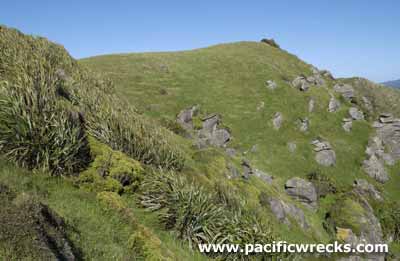 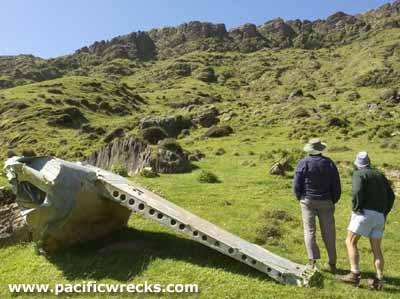 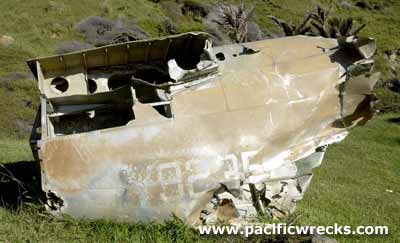 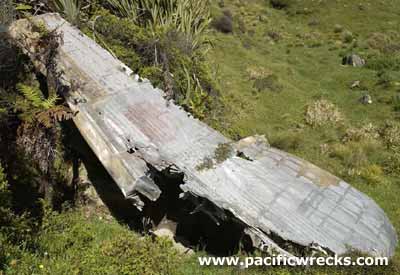 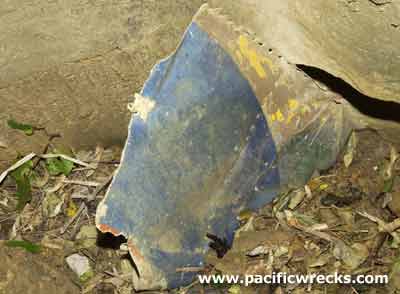 Tim Jordan 2003 |
Pilot P/O Alexander John MacFarlane, 401400 (KIA, BR) Manly, NSW Navigator P/O Louis George William Volzke, 404432 (KIA, BR) Ngaere, Taranaki W/O / Gunner Sgt Keith Robertson Jack, 391703 (KIA, BR) Levin W/O / Gunner Sgt Phillip David Harrison, 401929 (KIA, BR) Upper Hut Crashed December 15, 1941 Aircraft History Built by Lockheed Aircraft Corporation (LAC) in Burbank. Constructors Number 3820. Delivered to the Royal Air Force (RAF) as Hudson Mark III serial number V9235. Disassembled and loaded aboard Limerick as cargo and shipped across the Pacific to New Zealand. Wartime History On September 18, 1941 delivered to the Royal New Zealand Air Force (RNZAF) as Hudson Mark III serial number NZ2007 reassembled by No.1 Aircraft Depot at Hobsonville Airfield. Assigned to No. 2 Squadron. No known nickname or nose art. This was the first RNZAF Hudson lost. Mission History On December 15, 1941 before 5:00pm took off from Nelson Airfield piloted by P/O Alexander J. MacFarlane on a patrol over the Cook Strait region between the North and South Islands of New Zealand The weather at the time was considered suitable for flying, although conditions over the sea were forecast to worsen, and MacFarlane had been instructed to cut the three hour patrol short if required. After take off, nothing more was heard from this Hudson until 6:56pm when a signal was received indicating that the aircraft was returning to base. As wireless silence was in force, it was taken to mean the weather was to bad to continue the patrol and the Hudson was coming home early. The position of the signal placed this aircraft 60nm off the coast with an estimated time of arrival (ETA) of 7:35pm. This Hudson failed to return and no further radio contact made. When this aircraft failed to return it was officially listed as Missing In Action (MIA). Search Afterwards, it was believed this Hudson had crashed into the sea or on the west coast of the South Island and searches were flown in these areas but bad weather including low cloud and rain hampered search efforts that had nil results. On December 21, 1941 civilian Bruce Ferguson reported to the police that his father William Ferguson the only person on an isolated farm during the night of December 15, 1941 he heard several loud reports as if a .303 was being fired and on the ground there was a heavy fog over the west coast. Suspecting deer-stalkers, Ferguson had not taken any further action although he noted that the livestock near the farm house were behaving strangely. Without a working radio, William had no knowledge of the missing aircraft, and had only mentioned it in passing to Bruce when he came to visit days later who reported it to the police. Wreckage On December 22, 1941 despite being given the brush-off by the police, Bruce Ferguson and his neighbor Albert Beardmore, searched the coast and hills the following morning. At 10:30am they informed the authorities that they had found the wreckage of Hudson NZ2007 seven days after it crashed. The Hudson had flown into a 700' coastal cliff, just below the summit, and scattered itself over the surrounding hillside. The remains of the four crew were removed the following morning with death being ruled as instantaneous in all cases. The subsequent Court of Inquiry placed the blame with the pilot, finding that the aircraft was on the correct track but ahead of its scheduled timings. With no visibility, the crew of NZ2007 would not have seen the hill looming up in front of them and had no chance of avoiding it. Tim Jordan reports: "I visited the area in late December 2003, almost 62 years to the day. I was able to interview Bruce Ferguson and his memory of the event was still clear as though it had happened yesterday. His son David took me out to the crash site and we climbed the hill to the main point of impact. Along the way we stopped at the largest pieces of wreckage at the site, namely part of the tail plane near the base of the hills and one of the wings further up the slope. There were several small pieces poking out of the ground along the way but a large amount has been removed over the years. There was no evidence of a crash in the shallow bowl near the top of the cliff where the Hudson had first hit. However, I clambered down a nearby sinkhole and found a piece of fuselage skin, which still had part of the roundel painted on it." Recovery of Remains After the crash site was found the remains of the crew were recovered on December 23, 1941 and buried at four different cemeteries in New Zealand. MacFarlane is buried at Nelson (Wakapuaka) Cemetery at 16.50. Volzke is buried at Stratford (Kopuatama) Cemetery at plot 11, block 71. Jack is buried at Levin (Tiro Tiro Road) Cemetery at 12.45. Harrison is buried at Wellington (Karori) Cemetery at 15.C/3/(S). References ADF Serials - Hudson NZ2007 CWGC - Alexander John MacFarlane CWGC - Louis George William Volzke CWGC - Keith Robertson Jack CWGC - Phillip David Harrison Thanks Tim Jordan for additional information and photographs Contribute Information Are you a relative or associated with any person mentioned? Do you have photos or additional information to add? Last Updated December 15, 2023 |
 Hudson |
| Discussion Forum | Daily Updates | Reviews | Museums | Interviews & Oral Histories |
|