|  |
|

| Missing In Action (MIA) | Prisoners Of War (POW) | Unexploded Ordnance (UXO) |
| Chronology | Locations | Aircraft | Ships | Submit Info | How You Can Help | Donate |
|
| USAAF 5th AF 43rd BG 65th BS Former Assignments: 88th RS 19th BG 28th BS 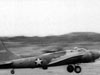 via Bombing of Darwin by Japanese c1942  Hal Winfrey 1943  43rd BG c1943  Jose Holguin c1943 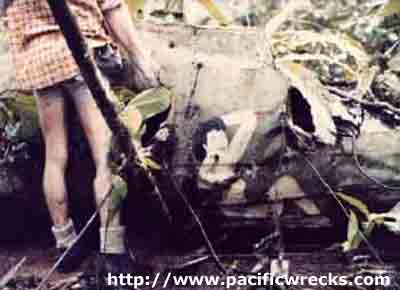 Bruce Hoy 1982 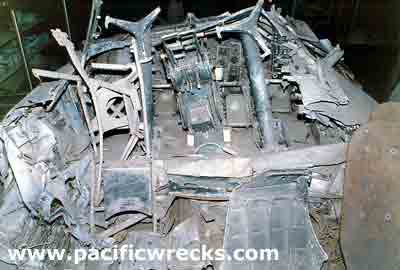 Rodger Kelly 1986 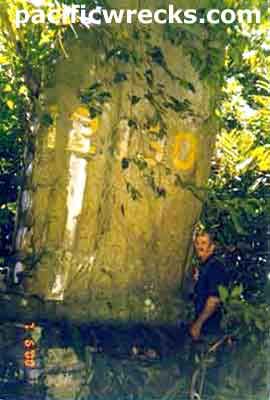 Brian Bennett 2000 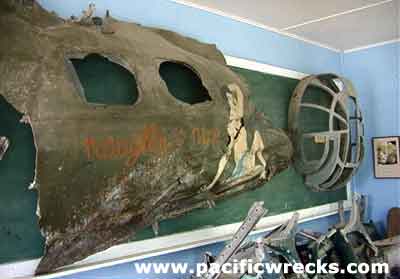 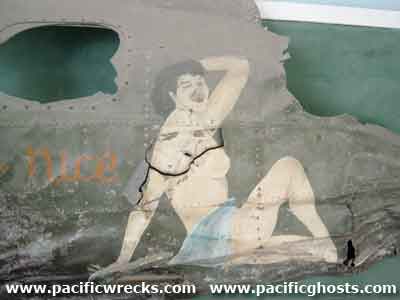 Justin Taylan 2003  Justin Taylan 2006  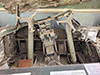 Justin Taylan 2018 |
Pilot 1st Lt. William J. Sarsfield, Jr., O-791243 (MIA / KIA, BR) Philadelphia, PA Co-Pilot 2nd Lt. Charles E. Trimingham, O-727282 (MIA / KIA, BR) Salinas, CA Bombardier 1st Lt. Francis G. Peattie, O-727655 (MIA / KIA, BR) Beacon, NY Navigator 1st Lt. Jose L. Holguin, O-728388 (POW July 17, 1943, survived) Los Angeles, CA Asst Bomb 2nd Lt. Herman H. Knott, O-669320 (MIA / KIA, BR) New York, NY Engineer TSgt Robert L. Christopherson, 17017152 (MIA / KIA, BNR) Blue Earth, MN Asst Engineer SSgt Henry Garcia, 19080310 (MIA / KIA, BR) Los Angeles, CA Radio TSgt Leonard A. Gionet, 11009541 (MIA / KIA / BR) Shirley, MA Asst Radio/Ball Turret SSgt Robert E. Griebel, 37139583 (MIA / KIA, BR) Riverton, WY Gunner SSgt Pace P. Payne, 18081362 (MIA / KIA, BR) Corsicana, TX Crashed June 26, 1943 MACR 14590 Aircraft History Built by Boeing at Seattle. Constructors Number 2241. Delivered to the U.S. Army Air Force (USAAF) as B-17E Flying Fortress serial number 41-2430 at Boeing Field. In late November 1941, this B-17 was scheduled to be flown away by Lt. Frederick Eaton but was delayed due to an engine change. On November 29, 1941 took off from Boeing Field piloted by Lt. David G. Rawls on a flight to Fort Douglas Airfield. Assigned to the 88th Reconnaissance Squadron (88th RS). Nicknamed "Naughty But Nice" painted in orange in a cursive font on the right side of the nose below the two rectangular navigator windows with the nose art of a topless brunette woman with one hand behind her head and wearing a blue skirt painted on the right side of the nose. Named by either 1st Lt Harold N. Chaffin or T/Sgt Russell Mackey who were assigned as crew. Wartime History On December 6, 1941 took off from Hamilton Field piloted by 1st Lt Harold N. Chaffin on a ferry flight bound for Hickam Field on Oahu. This bomber had the .50 caliber machine guns installed but carried no ammunition. Aboard was "Crew No. 2" including co-pilot 2nd Lt Mabry Simmons, 2nd Lt Walter H. Johnson, Aviation Cadet Hubert S. Mobley, TSgt Russell E. Mackey, SSgt Lucuis W. Weeks, Sgt Irving W. McMichael, PFC Robert K. Barnard. On December 7, 1941 in the morning incoming Japanese aircraft detected on radar were dismissed as the expected flight of B-17s and arrived during the Japanese surprise attack on Pearl Harbor and Oahu. This B-17 diverted to land safely at Haleiwa Field. Afterwards, flown to Hickam Field. During December 1941 flew search missions off Hawaii. This B-17 was painted in the Hawaiian Air Depot (HAD) three color camouflage scheme consisting of dark green, olive drab and tan upper surfaces with standard gray lower surfaces. In the middle of February departs Hickam Field piloted by Lt. Chaffin flown across the Pacific to Australia. On February 16, 1942 lands at Archerfield Airfield near Brisbane. Assigned to the 5th Air Force (5th AF), 19th Bombardment Group (19th BG), 28th Bombardment Squadron (28th BS). On February 18, 1942 while taxing DC-3 VH-ACB collided with this bomber, damaging the starboard wing, tail and part of the fuselage and also damaged Lodestar LT922 parked alongside. The damage was repaired over the next nine days and missed participating in the first U.S. bombing mission that departed Garbutt Field in the evening of February 22, 1942 and flew overnight to bomb Rabaul at dawn on February 23, 1942. In early 1942 modified at Garbutt Field at Townsville with a metal plate installed at the center of the nose as a reinforcement to mount a single .50 caliber machine gun for additional forward firepower. Also, the lower Bendix turret was removed and replaced by a Sperry ball turret. During November 1942, assigned to the 43rd Bombardment Group (43rd BG) "Ken's Men", 65th Bombardment Squadron (65th BS) to pilot Hal C. Winfrey with crew chief Spillyards. In Australia, operated from Garbutt Field near Townsville. In early 1943 began flying from 7 Mile Drome near Port Moresby in New Guinea. On March 3, 1943 during the Battle of the Bismarck Sea took off piloted by 1st Lt. James L. Easter on a bombing mission against the Japanese convoy in the Bismarck Sea off Umboi Island (Rooke). This B-17 was leading the second element with B-17 pilot 1st Lt. Niece and B-17 pilot 1st Lt. Woodard Over the target, intercepted by Ki-43 Oscars from the 11th Hiko Sentai (11th Flying Regiment). A pair of fighters made a single firing pass that damaged the B-17 from nose to tail and wounded four of the crew: 1st Lt. James L. Easter, SSgt Harold J. Perdue, Sgt Boyd H. Parker and Sgt Louis Molin. Despite his wounds, pilot Easter put the bomber into a dive to evade the fighters. Damage with wounded crew aboard, co-pilot 2nd Lt. Russell S. Emerick took the controls and turned towards New Guinea but due to clouds landed at Dobodura Airfield. While landing one of the main wheels went flat from damage and once the plane rolled to a stop the wounded crew were evacuated and the damaged B-17 was towed off the runway with many bullet holes. Pilot Easter later died of his wounds in 1948 was buried at Arlington National Cemetery at section 12, site 4359. On June 23, 1942 took off piloted by Hal C. Winfrey on a bombing mission against Koepang and gunners claim a A6M2 Zero shot down. Mission History On June 25, 1943 at 11:00pm took off from 7 Mile Drome near Port Moresby piloted by 1st Lt. William J. Sarsfield, Jr. and landed at Dobodura Airfield to refuel and load bombs. Regular pilot Hal C. Winfrey had a slight wound and was unable to fly the mission. Instead, 2nd Lt. Charles E. Trimingham flew in his place. Also aboard was trainee 2nd Lt. Herman Knott. Just before midnight, took off from Dobodura Airfield as one of three B-17s from 65th BS, six B-17s from 65th BS and four B-24D Liberators from 403rd BS flying individually on a night bombing mission against Vunakanau Airfield near Rabaul. On June 26, 1943 arrived over the target area despite bad weather and thunderstorms. At approximately 3:00am successfully bombed Vunakanau Airfield and came under intense anti-aircraft fire but was not hit. After bombing, the crew observed 7-9 parked planes burning. Afterwards, this bomber loitered over the area for 30 minutes in an attempt to confuse enemy anti-aircraft and radar to allow other B-17s to complete their bombing. Meanwhile, J1N1 Irving night fighter pilot Shigetoshi Kudo intercepted and shot down at 2:30am B-17F "Taxpayer's Pride" 41-24448 (crew MIA, one POW). When this aircraft failed to return it was officially listed as Missing In Action (MIA). Afterwards, the same nightfighter spotted this B-17 and approached from lower altitude used its oblique upward firing 20mm cannons to make three firing passes around 3:30am, 3:45am and 3:50am with each pass causing damage that resulted in the bomber being shot down. Around 3:30am, as this bomber turned towards base, it was suddenly hit from below by gunfire from the night fighter that hit the no. 1 engine causing it to catch fire and caused the no. 2 engine to not function properly. Immediately, the fire was extinguished but began to loose altitude. Inside the nose, navigator 1st Lt. Jose L. Holguin was hit in his jaw and given first aid by bombardier 1st Lt. Francis G. Peattie who tied a scarf around his jaw and said he "believed they were being attacked by a night fighters" and release the nose escape hatch to save weight. The crew withheld defensive gunfire so as not to reveal their position. Ten minutes later around 3:40am, the night fighter made a second firing pass and 1st Lt. William J. Sarsfield was hit and killed by gunfire. Navigator 1st Lt. Jose L. Holguin was hit in his left leg. The crew could see no tracers and were sure they were being attacked by a night fighter as they were far away from anti-aircraft positions. The gunners opened fire wildly, in hopes of hitting the attacker. Unable to maneuver away due to the bad engines, the crew were ordered to bail out over the mountains. Five minutes later around 3:45am, as the crew were preparing to bail out, the night fighter made a third attack that hit the left wing and gas tanks causing it to catch fire and burn fiercely and cut intercom communication with the pilot. Aboard, 1st Lt. Jose L. Holguin saw a twin engine night fighter below and ball turret gunner SSgt Griebel fired on the night fighter but it was not hit or damaged. In the nose, Peattie appeared to be wounded in both legs and Holguin attempted to climb to the flight deck to check on the pilots but was thrown to the floor as the bomber begin falling off on the right wing without control and created strong G-forces that pinned them both down and caused equipment to fall. Holguin grabbed Peattie's parachute strap and tried to help him reach the nose escape hatch. Around 1,000' the B-17 entered a spin and Holguin was thrown out the nose escape hatch and opened his parachute before the bomber crashed in the jungle of the Baining Mountains southwest of Rabaul. Search When both bombers failed to return, it was assumed they was lost to anti-aircraft fire or bad weather. The next day, two B-17s from the 43rd Bombardment Group (43rd BG) flew search missions down the north of New Britain then down the south coast of New Britain, but found nothing. Learning of this loss, regular pilot Hal C. Winfrey blamed himself for not flying the mission. Fate of Jose Holguin Sole survivor Jose Holguin landed in the jungle severely wounded with a broken jaw and back injuries. Miraculously, he crawled without food or medical treatment for weeks until discovered by local people and taken to Arumbum village where he was fed and given basic medical treatment. Because of his severe injuries, the villagers decided to turn him over to the Japanese in hopes he would give him medical treatment. On July 17, 1943 Holguin was turned over to the Japanese and became a Prisoner Of War (POW). He was transported to Rabaul where he was detained at the Rabaul Prisoner Compound by the Japanese Army Kempei-Tai (Military Police). As a prisoner, Holguin received no medical treatment, interrogations and harsh treatment. During early 1944, he and other surviving prisoners were moved to the Tunnel Hill POW Camp. Holguin was experimented on by Doctor Hirano who deliberately injected him with malaria. In September 1945, after Japan officially surrendered, he was one of only nine Allied prisoners who survived captivity at Rabaul and was liberated by the Australian Navy and transported to Jacquinot Bay then was flown aboard a C-47 to New Guinea then returned to the United States. Wreckage This B-17 crashed into mountains to the north of Wusing village in the Baining Mountains. The entire crew died in the crash with the exception of Jose Holguin who managed to bail out. Afterwards, the crash site was visited by the Japanese (likely guided by local people) and buried the remains of the crew in a shallow grave near the wreckage. Also, they recovered intelligence material from the crash site including papers that were later shown to POW Jose Holguin. Brian Bennett adds: "Jose Holguin was adamant that the Japanese walked into B-17E 41-2430 as he was shown a leaf from his flight log during a later interrogation. The recovery of some remains from a shallow grave [where the Japanese buried them] post war is perhaps further evidence of a visit." During April 1949, a team from U.S. Army 604th Quartermaster Graves Registration Company including Sgt Sotan and Cpl Cramer trekked from Rabaul to the crash site from Rabaul and recovered remains of the crew. On July 30, 1982, the crash site was rediscovered by sole survivor Jose Holguin with Brian Bennett, Bruce Hoy modern history curator PNG War Museum and members of the local community. During their visit, they located the cockpit section, wing with the nickname "Naughty But Nice" and nose art. Recovery of Remains During early 1949, the crash site was reported by natives to the U.S. Army 30th Engineer Battalion doing survey work in the area. American personnel visited the crash site and partial remains were recovered from beside the aircraft. During April 1949, a team from U.S. Army 604th Quartermaster Graves Registration Company including Sgt Sotan and Cpl Cramer trekked from Rabaul to the crash site to recover the remains of the crew. During their visit, they recovered three sets of partial remains in a shallow grave and a ring with the initials 'H.G.' (Henry Garcia) engraved on it. The remains were assigned the code "IB-28 unknown (Group)" and transported to the Central Identification Laboratory (CIL) at Schofield Barracks. These remains were incorrectly disproved to be associated with this aircraft and were instead deemed to be unknowns. Even the ring with initials they did not associate with Henry Garcia. The recovered remains were interned in a group burial at National Memorial Cemetery of the Pacific (Punchbowl) at graves 607, 610 and 612. Due to the efforts of sole survivor Jose L. Holguin, the unknown remains recovered from the crash site in 1949 were disinterred on August 7, 1984 from Honolulu Cemetery (Punchbowl) for reexamination. They were accessioned by US Army CILHI on the same day with case number CILH 0024-84 through CILHI 0028-84. On February 21, 1985, five of crew remains were positively identified: Peattie, Knott, Garcia, Griebel and Payne. During 1985, Each was buried in their hometown cemeteries. Both Holguin and Winfrey attended each memorial service for their comrades. After the rediscovery of the crash site in 1982, a team from US Army CILHI visited the crash site between September 7-9, 1983 and again on August 18-22, 1984. In 2000, Brian Bennett accompanied US Army CILHI to the crash site again for an additional search. During July 23 - August 20, 2001 a team from US Army CILHI excavated the crash site and recovered human remains and additional material, U.S. Army equipment and items used by crew members were accessioned on August 27, 2001 as CILHI 2001-152. On September 26, 2001 six tooth samples were submitted to the Armed Forces DNA Identification Laboratory (AFDIL) for mDNA testing. On January 31, 2002 four bone samples were also submitted and on December 16, 2005 five more bone samples were submitted. No additional remains were found during any of these additional visits and the site was declared cleared. During 2010, the remains of Gionet were identified and scheduled for burial during September 2011. Holguin Returns to Rabaul As the sole survivor of his crew, Holguin made it his personal quest to find the remains of comrades. During the 1980s, he used his own funds to make four trips to Rabaul to search for and relocate the crash site. On his first trip in 1981, Holguin was accompanied by former pilot Hal Winfrey. Together, they met Brian Bennett who took them to Arumbum village in the Baining Mountains. There, they located Mrs. Inui, who tended to Holguin's wounds and helped nurse him. On his second trip in 1982, Holguin joined Brian Bennett and Bruce Hoy (PNG Museum Curator) and returned to the Baining Mountains. With the help of an elderly villager from the area, they were led to the crash site. Brian Bennett located the first piece of wreckage, a supercharger, then the group found the rest of the wreckage and cockpit section nearby. On the side of the nose, the nose art and nickname "Naughty But Nice" were still clearly visible. On his third or fourth in early 1984, Holguin returned to the crash site intent on salvaging the cockpit section. Placing lifting straps around the wreckage, it was lifted and flown back to Rabaul and later brought to the Kokopo Museum for display. Brian Bennett and his son Lenny Bennett spent a week cleaning the relic with cotton balls and applying a lacquer to remove growth and protect the original paint. Later, the nose art section was removed, and displayed separately from the cockpit area. Also during the 1980s, Holguin located and reconciled with W. O. Matsumoto, his former Kempei-Tai (military police) prison guard at Rabaul in hopes hopes he might reveal more details about the execution and burial of American Prisoners Of War. Memorials With the exception of Holguin, who survived, the entire crew was officially declared dead the day of the mission. All of the missing crew members are memorialized at Manila American Cemetery on the tablets of the missing. After they were identified, a rosette was added next to each name indicating they were accounted for. Sarsfield earned the Silver Star, Distinguished Flying Cross (DFC) and Purple Heart, posthumously. Trimingham earned Distinguished Service Cross (DSC), Silver Star, Distinguished Flying Cross (DFC), Air Medal and Purple Heart, posthumously. Peattie earned the Silver Star with Oak Leaf Cluster, Distinguished Flying Cross (DFC), Air Medal and Purple Heart, posthumously. Knott earned the Air Medal and Purple Heart, posthumously. Christopherson earned the Silver Star, Distinguished Flying Cross (DFC), Air Medal with Oak Leaf Cluster and Purple Heart, posthumously. Garcia earned the Silver Star with Oak Leaf Cluster, Distinguished Flying Cross (DFC), Air Medal, Purple Heart with Oak Leaf Cluster, posthumously. Gionet earned the Silver Star, Distinguished Flying Cross, Air Medal with Oak Leaf Cluster, Purple Heart with Oak Leaf Cluster, posthumously. Griebel earned the Silver Star, Distinguished Flying Cross (DFC) with Oak Leaf Cluster, Air Medal with Oak Leaf Cluster and Purple Heart, posthumously. Payne earned the Silver Star, Distinguished Flying Cross (DFC), Air Medal with Oak Leaf Cluster and Purple Heart with Oak Leaf Cluster. After the crew identifications in 1984, five were permanently buried in the hometowns during 1985. Knott was buried at Long Island National Cemetery at section 2J site 92A. Payne was buried at Oakwood Cemetery at Corsicana, TX. Griebel was buried at Mountain View Cemetery in Riverton, WY. Trimingham was buried at Irvington Memorial Cemetery in Fremont, CA at Section C; Row 1; Space 48 Garcia was buried at Rose Hills Memorial Park in Whittier, CA at National Shrine Lawn, Gate 9 Section 11 Lot 4234 Grave 4. Peattie was buried next to his parents at Old Saint Joachims Cemetery (Old Beacon Cemetery) in Beacon, NY. In his home town of Beacon, there is a memorial plaque at the Lewis Tomkins Hose Company #1 where he volunteered as a fireman prewar. At the firehouse, his medals, a crew photo and a piece of wreckage from the B-17 donated by Holguin are on display. Gionet has a memorial marker at Saint Anthony's Cemetery in Shirley, MA at lot 9. Holguin passed away March 22, 1994. He is buried at Fairhaven Memorial Park, Santa Ana CA at lawn grave AH. Former pilot, Hal C. Winfrey passed away on December 10, 1998 in Atlanta, GA. He is buried at Decatur Cemetery in Decatur, GA at section 12. After additional remains were identified, more of the crew were buried on September 21, 2011 at Arlington National Cemetery in a group burial at section 60 site 9742 that includes remains of Sarsfield, Christopherson, Gionet, Knott, Peattie, Garcia, Griebel, Payne and Trimingham. Relatives Curt Holguin (son of Jose Holguin) Henry Garcia Jr. (son of Henry Garcia) Bonnie Williams (daughter of Robert L. Christopherson) References Note, the Missing Air Crew Report 14590 (MACR 14590) and many published sources since list the crew on the June 25-26, 1943 mission when lost as pilot Sarsfield and co-pilot Trimingham. In fact, the pilot was Trimingham and co-pilot Sarsfield according to Hal Winfrey and Jose Holguin. The IDPF (IDPF) for Sarsfield lists him as pilot. NARA World War II Army Enlistment Records - William J. Sarsfield NARA World War II Army Enlistment Records - Charles E. Trimingham NARA World War II Army Enlistment Records - Francis G. Peattie NARA - World War II Army Enlistment Records - Jose L. Holguin NARA World War II Army Enlistment Records - Herman H. Knott NARA World War II Army Enlistment Records - Robert L. Christopherson NARA World War II Army Enlistment Records - Henry Garcia NARA World War II Army Enlistment Records - Leonard A. Gionet NARA World War II Army Enlistment Records - Pace P. Payne Individual Deceased Personnel File (IDPF) - William J. Sarsfield, Jr. Individual Deceased Personnel File (IDPF) - Charles E. Trimingham Individual Deceased Personnel File (IDPF) - Francis G. Peattie Individual Deceased Personnel File (IDPF) - Pace P. Payne USAF Serial Number Search Results - B-17E Flying Fortress 41-2430 "2430 delivered Salt Lake SAD Nov 30, 1941. Assigned to 7th BG, 88th RS. Was one of six planes that flew into Pearl Harbor Dec 7, 1941. transferred to 40th BS, 19th BG, then 65th BS, 43rd BG. Ferried to Australia and nicknamed "Naughty But Nice". Shot down by J1N1-S Jun 25, 1943, Vunakanau, SW Pacific with 65th BS, 43rd BG while on night mission to Rabaul. MACR 14590. One crew POW, rest KIA." 7 December 1941 - The Air Force Story - Appendix D - B-17s Arriving During the Attack page 157 "B-17C 41-2430 / Crew No. 2: 1st Lt Harold N. Chaffin, 2d Lt Mabry Simmons, 2d Lt Walter H. Johnson, Avn Cdt Hubert S. Mobley, TSgt Russell E. Mackey, SSgt Lucuis W. Weeks, Sgt Irving W. McMichael, PFC Robert K. Barnard." Oz@War - Crash of DC3 Civilian aircraft into USAAF B-17E and Dutch Lockheed Lodestar on 18 February 1942 BritishPathe "Bombing of Darwin by Japanese (1942)" 0:47–0:53 B-17E 41-2430 take off from Garbutt Field Diary of Jose Holguin - June 25, 1943 "25 - Friday [June 25, 1943] When I returned from the hospital [visiting Winfrey], I was put on the alert to fly with another crew. I refused to fly with that crew because I did not have any confidence in the two pilots. I had flown with each of them before on previous mission as co-pilots. Their instrument flying was terrible and dangerous. I told Capt Cromey I would fly again when Winfrey got well. He asked me if I would fly with Trim [Trimingham] and I said yes. Trim will fly in Winfrey’s place as our co-pilot is a guy named Sarsfield. We are scheduled to take off for Rabaul at 2300." Missing Air Crew Report 14590 (MACR 14590) created June 10, 1945 (Page 2) "11. Number persons aboard aircraft... 1. Pilot Sarsfield, W.J. Jr. 1st Lt. 2. Co-Pilot Trimingham, Charles E. 2nd Lt. Kodochosho, 251 Kōkūtai, June 26, 1943 NARA World War II Prisoners of War Data File does not list Jose Holguin as a reported POW of Japan PNG Museum Aircraft Status Card - B-17E Flying Fortress 41-2430 Paradise Magazine "The Lady And The Navigator" by Bruce Hoy Moonlight Interceptor (1985) pages 39-40 Recommended Recovery Sites (PNG-1986) via Brian Bennett "1. B-17/41-2430 A. This aircraft has been visited twice, once in 1983 and once in 1984. Each time a thorough ground search was conducted with negative results. In 1984, after additional research, 5 of the 9 crew members were located buried in the Punchbowl National Cemetery. They were disinterred and identified by CILHI. B. This site should be visited one last time as there are indications that some of the crew members were buried at the crash site." Reader's Digest "Lt. Holguin's Final Mission" April 1987 page 83 The Siege of Rabaul (1996) has a chapter on the shoot down of this B-17 Forty of the Fifth (1999) page 53 Fortress Against The Sun (2001) pages 12, 18, 384 JPAC "Memorandum for the record identification of CIL 2001-152 3 August 2009" [B-17E 41-2430] by Thomas D. Holland, PhD Scientific Director, JPAC-CIL Corsicana Daily Sun "A Promise to Friends" by Donell Williams November 11, 2005 Oregon Sentinel "'Angel Flight' brings closure for son of WWII B-17 crew member" Summer 2011 Ken’s Men Against The Empire The Illustrated History of the 43rd Bombardment Group During World War II Volume I: Prewar to October 1943 The B-17 Era (2016) pages 145-146 (March 3, 1942), 211 (color photos), 213 (painting caption), 214 (painting), 217 (profile no. 11 starboard side view) 222 (profile 11 port side view, profile 11 detail) 232 (nose art and crash site nose art photo), 233 (crew photo), 232 (June 26, 1943), 232-236 (Holguin Rabaul POW Camp), 314-315 (Easter KIA March 3, 1943), 318-319 (June 26, 1943 crew), 328 (41-2430, 65th BS), 334, 335 (photo), 344, 359-360 (profile 11 description), 390 (index James L. Easter), 394 (index Jose L. Holguin), 399 (index Naughty But Nice), 405 (index Trimingham) Arlington National Cemetery ANC Explorer - James L. Easter (grave photos) FindAGrave - James Lake Easter (obituary, photo, grave photo) date of death March 2, 1943 [sic March 3, 1943] American Battle Monuments Commission (ABMC) - William J. Sarsfield, Jr. "recovered and identified in 2001" American Battle Monuments Commission (ABMC) - Charles E. Trimingham "recovered and identified in 2001" American Battle Monuments Commission (ABMC) - Francis G. Peattie "recovered and identified in 2001" American Battle Monuments Commission (ABMC) - Herman H. Knott "recovered and identified in 2001" American Battle Monuments Commission (ABMC) - Robert L. Christopherson "recovered 1982, identified 2001" American Battle Monuments Commission (ABMC) - Henry Garcia "recovered in 1982 and identified in 2001" American Battle Monuments Commission (ABMC) - Leonard A. Gionet "recovered in 1982 and identified in 2001" American Battle Monuments Commission (ABMC) - Robert E. Griebel "recovered in 1982 and identified in 2001" American Battle Monuments Commission (ABMC) - Pace P. Payne "recovered and identified in 2001" FindAGrave - William J. Sarsfield, Jr (tablets of the missing photo) FindAGrave - 1Lt William J Sarsfield, Jr (Arlington grave photo) FindAGrave - Charles E. Trimingham (Irvington Memorial Cemetery grave photo) FindAGrave - 1Lt Charles Edward Trimingham, Jr (tablets of the missing photo) FindAGrave - Lieut Charles Edward Trimingham, Jr (Arlington grave photo) FindAGrave - Francis Gerard Peattie (Old Saint Joachims Cemetery grave photo) FindAGrave - 1Lt Francis G Peattie (tablets of the missing) FindAGrave - Francis O Peattie (Arlington grave photo) FindAGrave - 2Lt Herman H. Knott (tablets of the missing) FindAGrave - Herman H. Knott (Long Island National Cemetery grave photo) FindAGrave - Herman H. Knott (Arlington grave photo) FindAGrave - TSgt Robert L Christopherson (tablets of the missing photo) FindAGrave - Sgt Robert L Christopherson (Arlington grave photo) FindAGrave - Henry Garcia (Rose Hills Memorial Park) FindAGrave - SSgt Henry Garcia (Arlington grave photo) FindAGrave - Leonard Alphonse Gionet (photo, tablets of the missing) FindAGrave - Leonard Alphonse Gionet (Saint Anthony's Cemetery grave photo) FindAGrave - Leonard Alphonse Gionet (Arlington grave photo) FindAGrave - SSgt Robert E. Griebel (tablets of the missing) FindAGrave - Robert E. Griebel (Oakwood Cemetery grave photo) FindAGrave - Robert E. Griebel (Arlington grave photo) FindAGrave - Pace P. Payne (tablets of the missing) FindAGrave - Pace P. Payne (Oakwood Cemetery photo) FindAGrave - Pace P Payne (Arlington grave photo) Testimonial of Jose Holguin, State of California, County of Sacramento 1948 FindAGrave - Jose L. Holguin (photo, grave photo) FindAGrave - Hal Cawood Winfrey (grave photo) Thanks to Curt Holguin, Brian Bennett, Steve Birdsall and Bruce Hoy for additional information Contribute Information Are you a relative or associated with any person mentioned? Do you have photos or additional information to add? Last Updated May 13, 2025
|
 B-17  MIA / POW 1 Prisoner 9 Missing Partially Resolved  Photo Archive  Dataplates  Approx 4 40 S 151 41 4 E |
| Discussion Forum | Daily Updates | Reviews | Museums | Interviews & Oral Histories |
|


