|  |
|

| Missing In Action (MIA) | Prisoners Of War (POW) | Unexploded Ordnance (UXO) |
| Chronology | Locations | Aircraft | Ships | Submit Info | How You Can Help | Donate |
|
| USAAF 11th BG 42nd BS Former Assignments 50th RS 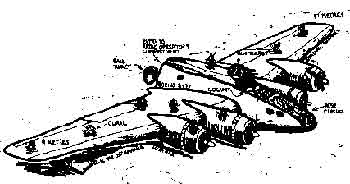 McFadyen 1998 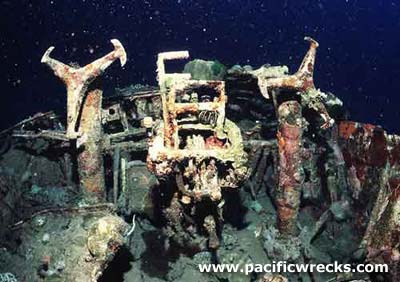 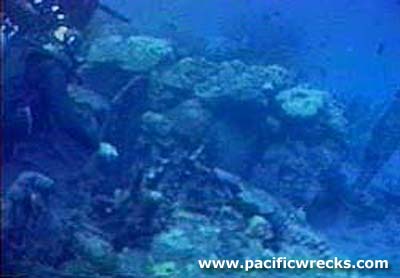  Jeff Johnson 1999  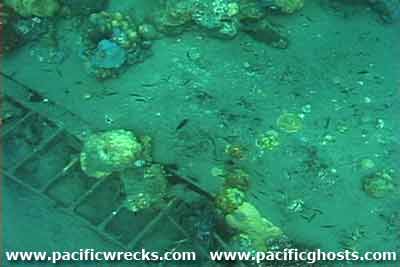 Justin Taylan 2003 |
Pilot 1st Lt Charles E. Norton, O-416333 (POW died September 30, 1942, MIA / KIA, BNR) Harpswell, ME Co-Pilot 1st Lt. Bruce B. S. Barker, O-428793 (MIA / KIA) Saskatoon, Canada Navigator 1st Lt. Leo M. Eminger, O-388557 Upton, NM (MIA / KIA) Albuquerque, NM Bombardier Sgt James "Buster" R. Mathewson, 16028061 (MIA / KIA) Durand, MI Radio SSgt Peter F. Novak, 6897614 (MIA / KIA) PA Gunner SSgt William L. Hotard, 6296361 (MIA / KIA) TX Lower Turret Gunner SSgt Fred S. Croyle, 6845914 (MIA / KIA) Somerset County, PA Gunner Sgt Bruce W. Osborne, 7082892 (MIA / KIA, BR) Sparta, NC Gunner Pfc Edward A. Carroll, 6979511 (MIA / KIA) Brooklyn, NY Ditched September 24, 1942 MACR unknown Aircraft History Built by Boeing at Seattle. Constructors Number 2231. On November 17, 1941 delivered to the U.S. Army Air Force (USAAF) as B-17E Flying Fortress serial number 41-2420. The same day flown to Salt Lake City and three days later flown to McClellan Airfield to Sacramento Air Depot (SAD). Wartime History Assigned to the 11th Bombardment Group (11th BG), 50th Reconnaissance Squadron (50th RS). Painted in the Hawaiian Air Depot (HAD) three color camouflage scheme consisting of dark green, olive drab and tan upper surfaces with standard gray lower surfaces at Hickam Field. After December 7, 1941 dispersed to Kahuku Airfield on Oahu. After January 1942, assigned to the 42nd Bombardment Squadron (42nd BS). On July 22, 1942 flown overseas to the South Pacific (SOPAC) to Espiritu Santo then to Henderson Field on Guadalcanal. Nicknamed "Bessie, Jap Basher" or "Bessie The Jap Basher". Mission History On September 24, 1942 took off from Henderson Field on Guadalcanal piloted by 1st Lt Charles E. Norton as one of four B-17s on a bombing mission against Japanese shipping in Shortland Harbor and Tonolei Harbor on southern Bougainville. Over the target, approximately twenty Japanese Zeros made determined attacks against the formation from the front and both beams. Two of the attackers were claimed as shot down and another probably damaged. Despite the attacks, this B-17 dropped its bombs on a cargo vessel, which they claimed "took on a decided list" indicating it might have been hit. Damaged by gunfire, this B-17 was last seen descending smoking with fighters in pursuit. Flying at sea level, this B-17 managed to fly back towards Guadalcanal before ditching into Domo Cove (Domma Cove, Ndomo Cove). When this aircraft failed to return it was officially listed as Missing In Action (MIA). This bomber was officially condemned on October 8, 1944. Fates of the Crew At least two of the crew Norton and Osborne survived the ditching and managed to swim ashore. Neither was officially reported as Prisoners Of War (POW) of the Japanese, but this was not uncommon for Allies captured in forward areas. Osborne reached the shore but might have drown or been killed by the Japanese and his body buried or abandoned. Norton managed to reach shore and captured by the Imperial Japanese Army (IJA). On September 30, 1942 the Aoba Battalion, Takeda Unit commanded by 1st Lt Yoshi Takeda that claimed a prisoner "died as [he] reached the place" this might mean he was injured and died in transit or is a euphemism that meant he was executed. His remains have never been recovered and remains listed as Missing In Action (MIA). The fates of the other seven are unknown. All remain listed as Missing In Action (MIA). Recovery of Remains During late January 1944, U.S. Navy (USN) 61st Naval Construction Battalion (61st NCB) "Seabees" found the skeletal remains of Osborne near the shore of Domo Cove. It is unclear if he reached shore and died or was also captured and executed. None of the other crew members were located. Salvage On January 29, 1944 the U.S. Navy (USN) 61st Naval Construction Battalion (61st NCB) "Seabees" found the wreckage of this bomber at the bottom of Domo Cove. On January 31, 1944 in the morning U.S. Navy (USN) divers explored the wreckage and found no indication of a fire aboard, but noted bullet holes in the fuselage, and discovered four parachutes inside the fuselage. The tail gunner's section was badly burnt. An explosion rear of the wings had broken the fuselage. The right wing was broken off at the body with only a small fragment intact. The engines were intact but between No.1 and No. 2 engines on the left wing was a large hole. Their search discovered no bones inside. Captain George Sagli was present when divers recovered the fuselage and tail assembly of the B-17. The wreckage had bullet holes in the fuselage and barnacles from being underwater for 16 months. The tail serial number "12420" was still clearly visible. No human remains or clothing were found in the recovered tail section. Inside the fuselage was a canteen with initials 'L.B' on the bottom .50 caliber machine gun (from the waist) loaded, belted .50 caliber ammunition in an aluminum box, 50 caliber shell cases on the floor of the fuselage, fired, five parachutes (two numbered 39224 and 38165), frame less gold rimmed spectacles, Eveready flashlight, 8" wrench, 6" screw driver, hunting knife in a scabbard, a Colt 45 caliber M1911 pistol serial number 7797 in a holster with a knife, Mae West life vests, three with the CO2 containers unopened and a 30 caliber shell fired into the plane. SF1C S. C. Kelly, 61st Seabees reported: "On the morning of 31 January 1944 we searched in Domo Bay and found a B-17 number 12420 on its belly offshore about 100 yards in 55 feet of water. There were innumerable small holes in the tail and the tail gun section had been burned badly. An explosion after of the wings had broken the fuselage from the main section of the pane although laying as it was it was impossible to get into that part of the plane. The right wing was broken off at the body with the exception of a small fragment holding it on. The motors were intact but between the two motors on the left wing was a large hole as if it had collided with something. I hooked on to the tail skid and that section with par of the fuselage up to the wings was pulled ashore. The water was so riled it was impossible to see into the main section of the plane to examine further. To the best of my knowledge there were no bodied in that part of the plane that I could get into at that time." On February 19, 1944 the wreckage was examined for any remains including T/4 Robert W. Cannon, HQ Forward Area plus a CPO, three enlisted men and an officer from the 27th Seabees. They found some person effects including the pilot's brief case with "C. E. Norton". No remains were found. Wreckage On January 31, 1944 the rear fuselage and tail were salvaged by U.S. Navy Seabees and dragged ashore. The fate of this wreckage is unknown. Possibly, it was transported elsewhere during the war, scrapped or otherwise disappeared. The wreckage of this B-17 rests in about 60' of water on a sandy bottom off Domo Cove (Ndomo). All the engines are intact on the plane, the nose section is collapsed, but cockpit still in good condition with the pilot's seat and top turret intact. Other wreckage is scattered in the vicinity. The fuselage from the bomb bay to the tail was salvaged on January 31, 1944. The ball turret rests in the sand behind the fuselage. Jeff Johnson dove the wreck in 1999: "I dove the wreck 3 times and it is relatively intact. Talking with the local dive master, he said that the locals witnessed the crash and the Japanese captured two survivors who they later executed. Another thing I noticed is that two out of the four engines had been feathered." Memorials The entire crew was officially declared dead on January 7, 1946. All are memorialized at Manila American Cemetery on the tablets of the missing. Norton earned the Distinguished Service Cross (DFC), Silver Star and Purple Heart, posthumously. Barker earned the Distinguished Flying Cross (DFC) and Purple Heart with Oak Leaf Cluster, posthumously. Eminger earned the Distinguished Flying Cross (DFC), Air Medal and Purple Heart, posthumously. He also has a memorial marker at Floyd Cemetery in Floyd, NM. Mathewson earned the Distinguished Flying Cross (DFC), Air Medal and Purple Heart, posthumously. He also has a memorial marker at Caledonia Cemetery in Sparta, IL. Novak earned the Distinguished Flying Cross (DFC), Air Medal and Purple Heart, posthumously. Croyle each earned the Distinguished Flying Cross (DFC), Air Medal and Purple Heart, posthumously. He also has a memorial marker at IOOF Cemetery Stoystown, PA. Hotard earned the Distinguished Flying Cross (DFC) and Purple Heart, posthumously. Croyle earned the Distinguished Flying Cross, Air Medal, Purple Heart, posthumously. Carroll earned the Distinguished Flying Cross (DFC), Air Medal and Purple Heart, posthumously. After the recovery of remains, Osborne was buried at Osborne Memorial Cemetery in Sparta, NC. The Veterans of Foreign War (VFW) Post in Sparta, NC was renamed the Bruce Wayne Osborne Post No. 7034 in his honor. Relatives David Tanner (great nephew of Eminger) "Leo Eminger was part of the 38th Recon Sq. from Albuquerque, NM. Eminger was awarded with the Distinguished Flying Cross, Air Medal with Oak Leaf Cluster and the Purple Heart. Eminger were both with the 88th Recon Squadron from Albuquerque Army Air Field. Eminger was with Crew No. 4 aboard B-17C 40-2063 one of the the B-17 flying from Hamilton Field bound for Hickam Field and arrived during the attack on December 7, 1941. Charles Norton was with Crew No. 6 which had to return to Hamilton Army Air Field due to engine trouble. I have also discovered, through many publications and personal contacts with crew families, photos of the pilot (Charles E. Norton), the co-pilot (Bruce B. S. Barker), and the bottom turret gunner (Fred S. Croyle). I am working on a photo of Bruce W. Osborne who is the only crew member listed as KIA because they found his bones." References Some sources state the nickname of this B-17 was "Bessie the Jap Smasher" incorrectly. USAF Serial Number Search Results - B-17E 41-2420 Individual Aircraft Record Card (IARC) - B-17E 41-2420 Missing Air Crew Report (MACR) number unknown created retroactively. NARA World War II Prisoners of War Data File does not list Charles E. Norton or Bruce W. Osborne as officially reported prisoners American Battle Monuments Commission (ABMC) - Charles E. Norton American Battle Monuments Commission (ABMC) - Bruce B. S. Barker American Battle Monuments Commission (ABMC) - Leo M. Eminger American Battle Monuments Commission (ABMC) - James R. Mathewson American Battle Monuments Commission (ABMC) - Peter F. Novak American Battle Monuments Commission (ABMC) - William L. Hotard American Battle Monuments Commission (ABMC) - Fred S. Croyle American Battle Monuments Commission (ABMC) - Edward A. Carroll FindAGrave - Capt Charles Edwin Norton (photo, tablets of the missing) FindAGrave - 1Lt Bruce Barnabas S Barker (tablets of the missing photo) FindAGrave - 1Lt Leo M Eminger (photo, tablets of the missing) FindAGrave - Leo M. Eminger (memorial marker) FindAGrave - Sgt James R "Buster" Mathewson (tablets of the missing) FindAGrave - Sgt James R Mathewson (memorial marker photo) FindAGrave - SSgt Peter F Novak (tablets of the missing) FindAGrave - SSgt William L Hotard (tablets of the missing) FindAGrave - SSgt William L Hotard (tablets of the missing) FindAGrave - Fred Schrock Croyle (memorial marker photo) FindAGrave - Bruce Wayne Osborne (news, memorial marker photos) FindAGrave - PFC Edward A Carroll (memorial marker photo) Fortress Against the Sun (2001) pages 269-270 Flight Journal Magazine by Franklin and Kathy Viola photographed wreckage, December 2000 Solomon Islands Diving "Bessie Jap Basher" by Mike McCoy via Wayback Machine January 3, 2004 Freedom Newspapers "War Scrapbook" by Kevin Wilson September 9, 2005 Thanks to David Tanner, William Bartsch, Jeff Johnson and Steve Birdsall for additional information Contribute Information Are you a relative or associated with any person mentioned? Do you have photos or additional information to add? Last Updated January 10, 2026 |
 B-17  POW / MIA 1 Prisoner 8 Missing  60m from shore 9-17m  Photo Archive  Johnson 1999 |
| Discussion Forum | Daily Updates | Reviews | Museums | Interviews & Oral Histories |
|


